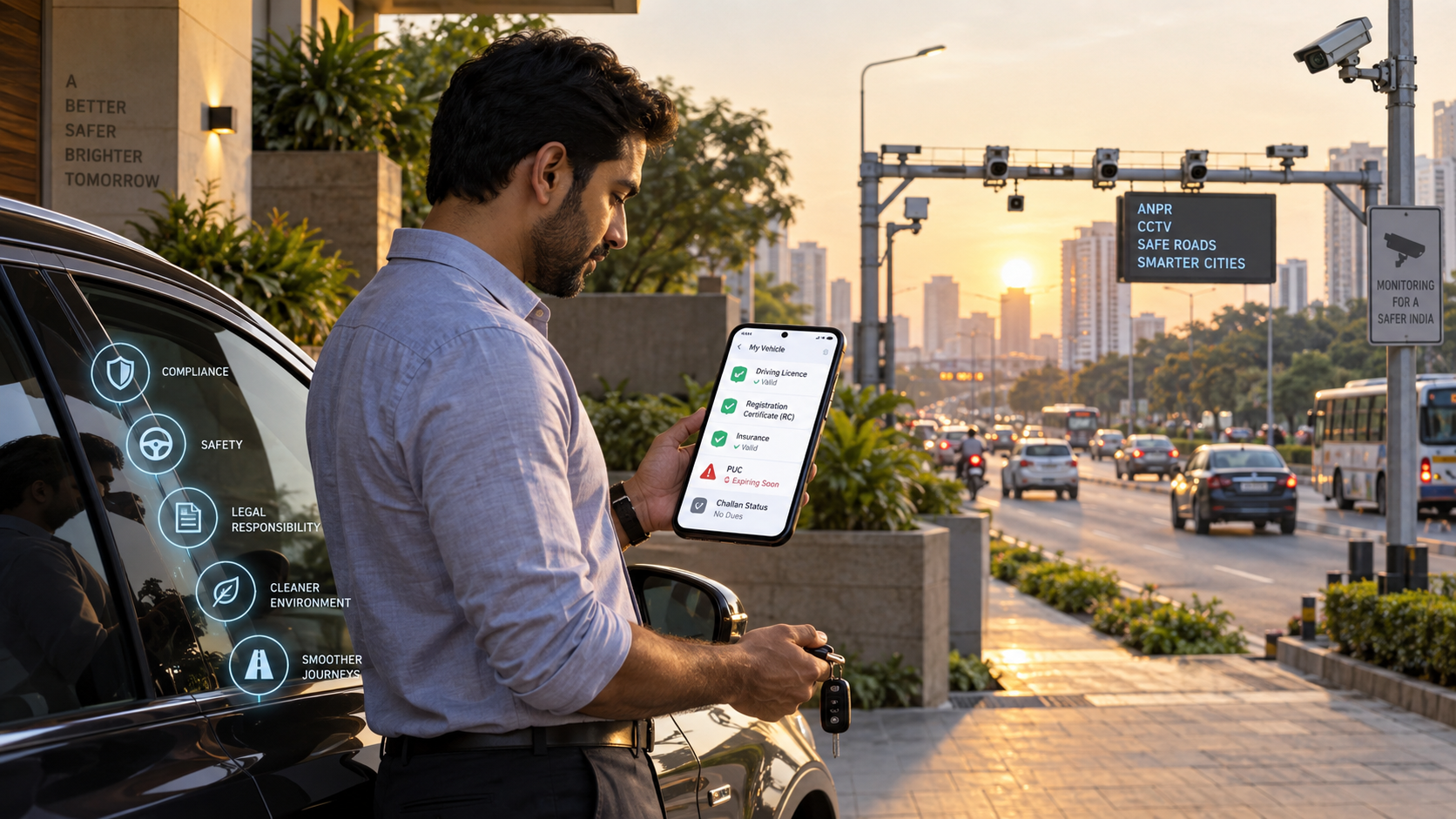
Owning a vehicle in India has traditionally meant keeping a few documents valid, following traffic rules and paying a fine when a violation occurs. But the nature of vehicle compliance is changing.
Today, enforcement is increasingly connected to digital databases. A traffic offence can create an electronic record, vehicle information can be checked digitally, and authorities can access compliance information without depending entirely on physical documents.
This shift is changing what it means to be legally responsible for a vehicle.
Your Vehicle Has a Digital Identity
A vehicle is no longer represented only by its physical registration certificate.
Government transport systems connect information relating to vehicles, drivers and enforcement. The eChallan system, for example, is integrated with transport databases and is designed to improve digital documentation, transparency and monitoring.
This means that when a vehicle is involved in an enforcement event, the resulting information can become part of a digital record.
For owners, this creates a simple responsibility: know what is recorded against your vehicle.
Compliance Is Becoming a Continuous Process
Earlier, vehicle owners often thought about compliance when renewing insurance, obtaining a pollution certificate or being stopped by traffic police.
Digital enforcement changes that approach.
Vehicle and driver records can be checked electronically, while challan systems provide access to offence and payment information online. The official eChallan platform allows users to check pending challans using a challan number, vehicle number or driving licence number.
Compliance therefore becomes less about carrying documents and more about maintaining accurate and up-to-date records.
Responsibility Does Not End With the Driver
One of the most important distinctions is between the person driving a vehicle and the registered owner.
A vehicle may be used by a family member, employee, friend or commercial driver. But the registration record continues to identify the registered owner.
This is why owners should not assume that every traffic issue will simply disappear because someone else was driving.
If an electronic challan appears against the vehicle, the owner should first verify the offence, date, location, vehicle information and available details before deciding what action to take.
Digital Records Can Influence Enforcement Decisions
Digital enforcement is not limited to generating challans.
Government transport systems have long been designed to allow enforcement information to be reflected electronically across connected systems. Official guidance has also provided for recommendations concerning suspension or blocking of driving licences or registration certificates where permitted by law.
This demonstrates an important principle: digital enforcement is becoming an ecosystem rather than a standalone fine-generation system.
A record created during one enforcement interaction can become relevant when authorities examine the vehicle or driver's compliance history.
What Should Owners Be Watching?
Vehicle owners should regularly review the information that can affect their legal ability to operate and maintain a vehicle.
This includes:
- Pending traffic challans
- Registration and ownership details
- Driving licence validity
- Insurance status
- PUC validity
- Fitness and permit requirements, where applicable
- Tax-related compliance
- Disputed or unresolved enforcement records
For commercial vehicle operators, this becomes even more important because compliance failures can affect not only the vehicle but also daily business operations.
Digital Convenience Also Creates Digital Risks
There is another side to online enforcement: fraud.
Fake eChallan websites, messages and mobile applications can imitate government services and attempt to collect payment information or personal details.
The official eChallan portal specifically warns users about fraudulent websites and apps and says it does not request passwords, OTPs, payment details or sensitive personal information through unsolicited calls, messages or links.
Therefore, digital compliance requires digital awareness too.
Never assume that a message containing a challan amount is genuine simply because it includes your vehicle number.
Verify the information through the official government system before making a payment.
What If the Digital Record Is Wrong?
Digital does not automatically mean infallible.
A vehicle owner may encounter an incorrect registration number, an offence that did not occur, inaccurate information or another disputed detail.
The current eChallan platform provides an online grievance facility where users can submit challan-related complaints and supporting information.
The correct response to a questionable challan is therefore not to ignore it.
Check the record, preserve relevant evidence and use the appropriate dispute or grievance process.
The 2026 Compliance Mindset
The biggest change is psychological.
Drivers should stop viewing compliance as something checked only when a traffic police officer stops the vehicle.
In a connected transport system, compliance can be monitored through digital records, databases and online enforcement platforms.
That does not mean every mistake automatically results in a major legal consequence. It means vehicle owners should become more proactive about the information attached to their vehicle and licence.
Final Word
Your vehicle is more than a machine registered in your name. It is also associated with a growing digital record of ownership, documentation and enforcement.
As India expands technology-driven mobility systems, responsible vehicle ownership increasingly means keeping that record accurate.
Check your vehicle information regularly. Resolve genuine violations on time. Challenge incorrect records through the proper channel. Keep essential documents valid. And never make payments through suspicious links.
In India's digital mobility environment, responsible driving is no longer only about what happens on the road. It is also about keeping your legal and digital compliance record in order.
