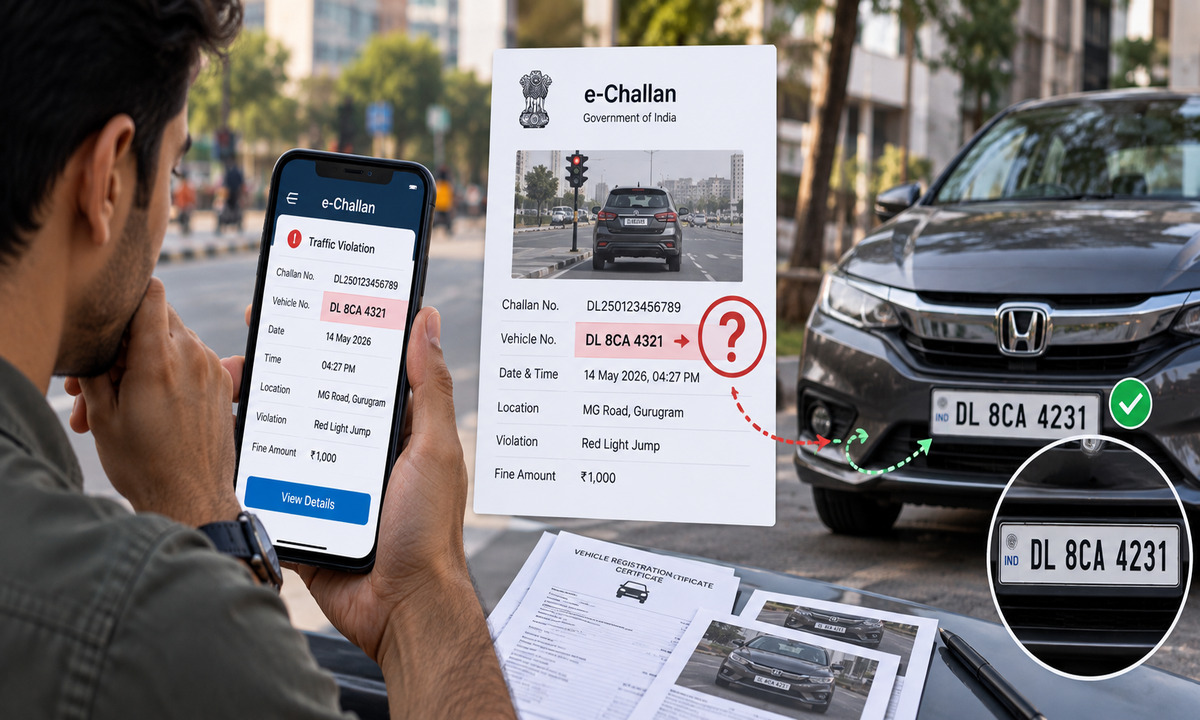
Receiving an e-Challan for a traffic violation you never committed can be confusing, especially when the notice is linked to your vehicle registration number. One of the most serious situations is discovering that the vehicle number mentioned on an e-Challan is incorrect.
A wrong registration number can happen because of an identification mistake, inaccurate data entry, number-plate recognition issues, or other technical reasons. Whatever the cause, vehicle owners should not ignore the notice. The better approach is to verify the record, collect evidence, and use the appropriate process to report the discrepancy.
Start With the Registration Number
When an e-Challan appears against your vehicle, the first thing to check is the registration number.
Do not focus only on the fine amount or type of violation. Compare the number mentioned in the challan with the registration number on your vehicle documents.
Look for differences in:
- Letters
- Numbers
- State or registration codes
- Vehicle series
- Other registration details
Even a single incorrect character can indicate that the challan may have been associated with the wrong vehicle.
How Can a Wrong Vehicle Number Happen?
Modern traffic enforcement often uses cameras and Automatic Number Plate Recognition systems to identify vehicles. Although these technologies can process large volumes of traffic efficiently, identification errors can occur.
Possible reasons include:
- Number Plate Recognition Error: A camera may incorrectly interpret a character because of poor image quality, lighting, dirt, damage, or an unusual viewing angle.
- Similar Registration Numbers: Two vehicles may have registration numbers that look similar, increasing the possibility of confusion during automated processing.
- Data Entry Mistake: Information may sometimes be entered incorrectly during the challan-generation or administrative process.
- Duplicate or Incorrect Records: A technical or database-related issue may result in a violation being associated with the wrong vehicle record.
Identifying the possible source of the error is useful, but the priority should be establishing that the challan does not relate to your vehicle.
What Evidence Can Help Prove Your Case?
A dispute is stronger when it is supported by clear evidence.
Depending on the circumstances, you may consider keeping:
- Vehicle Registration Certificate
- Clear photographs of your vehicle's number plate
- Challan details
- Photographic evidence attached to the challan, if available
- Insurance or other vehicle records
- Travel or location records where relevant
- Payment or previous compliance records
The objective is to demonstrate a clear mismatch between your vehicle and the vehicle associated with the alleged violation.
For example, if the challan photograph shows a different vehicle model, colour, body type, or registration plate, that information may be relevant when raising the dispute.
Compare the Challan Image Carefully
If photographic evidence is available, examine it rather than relying solely on the registration number displayed in the notice.
Ask:
- Does the number plate actually match your vehicle?
- Does the vehicle appear to be the same make or model?
- Is the image clear enough to identify the registration number?
- Does the location make sense?
- Does the date and time correspond with your circumstances?
A clear mismatch can provide useful evidence when challenging the notice.
What If the Vehicle Number Is Correct but the Vehicle Is Not Yours?
Sometimes the registration number displayed in the challan may actually belong to your vehicle, while the photograph appears to show another vehicle.
This can be more complicated than a simple typing error.
If the registration number is correct but the vehicle shown is different, preserve the image and compare it with your vehicle. Differences in the vehicle's appearance, number plate, model, or other identifying characteristics may support your complaint.
Do not alter, edit, or manipulate photographs or documents. Original evidence is more useful when establishing what actually happened.
How to Challenge the Wrong e-Challan
Once you have confirmed that the challan appears incorrect, use the designated grievance or dispute mechanism applicable to the challan.
A sensible process is:
- Verify the challan details.
- Record the exact discrepancy.
- Collect supporting evidence.
- Submit the complaint through the appropriate official channel.
- Clearly explain why the violation does not relate to your vehicle.
- Attach relevant evidence where permitted.
- Keep the complaint reference and supporting records.
- Monitor the status until the matter is resolved.
Avoid submitting a vague statement such as “This challan is wrong.” Explain precisely what is incorrect and support your claim with evidence.
Should You Pay a Challan You Believe Is Wrong?
If you genuinely believe the challan has been incorrectly attributed to your vehicle, do not make a payment simply because you are concerned about the notice.
First understand the applicable dispute procedure and any deadlines associated with the challan.
Payment, dispute, and court-related procedures can depend on the type of offence and the authority handling the matter. If the issue has potentially serious legal consequences, professional legal advice can help you understand the appropriate course of action.
Do Not Ignore the Notice
A wrong challan can still become a problem if it remains unresolved.
Ignoring it may leave the record associated with your vehicle until the competent authority takes appropriate action. Instead of waiting for the issue to become more complicated, address the discrepancy as soon as you discover it.
Keep copies of:
- The original challan
- Your complaint
- Uploaded evidence
- Acknowledgement or reference number
- Responses received from authorities
Good documentation can make it easier to follow up if the matter is not resolved immediately.
Check for More Than One Incorrect Challan
If you discover that one challan has been wrongly associated with your vehicle, it may be worth reviewing your other electronic traffic records as well.
Look for:
- Duplicate violations
- Unfamiliar locations
- Unusual dates
- Repeated offences you did not commit
- Images showing another vehicle
This can help identify whether the problem is an isolated error or a recurring issue.
Protect Your Vehicle Records
Accurate vehicle information is increasingly important as traffic enforcement becomes digital. Vehicle owners should maintain updated registration information and keep copies of important documents.
If a vehicle has been sold, transferred, or otherwise changed ownership, completing the applicable documentation promptly is particularly important. Outdated records can create confusion when traffic violations are linked to registration databases.
When Should You Consult a Lawyer?
A simple registration-number mismatch may be addressed through the designated administrative process. However, legal assistance may become valuable when the matter involves repeated incorrect challans, vehicle seizure, licence-related consequences, court proceedings, or a serious alleged offence.
A legal professional can review the available evidence and help determine what remedies or procedures may be appropriate.
Final Takeaway
An e-Challan linked to the wrong vehicle number should not be treated as an unavoidable penalty. Technology has made traffic enforcement faster and more efficient, but identification or data-related errors can still occur.
If you receive a notice that does not belong to your vehicle, verify the registration number, inspect the available evidence, collect genuine supporting documents, and raise the issue through the appropriate official process.
The strongest challenge is not based simply on saying that you did not commit the offence. It is based on demonstrating why the vehicle identified in the challan does not match your vehicle and providing evidence that supports that position.
For complicated disputes, timely legal guidance can help ensure that an incorrect traffic record does not turn into a larger compliance or legal problem.
