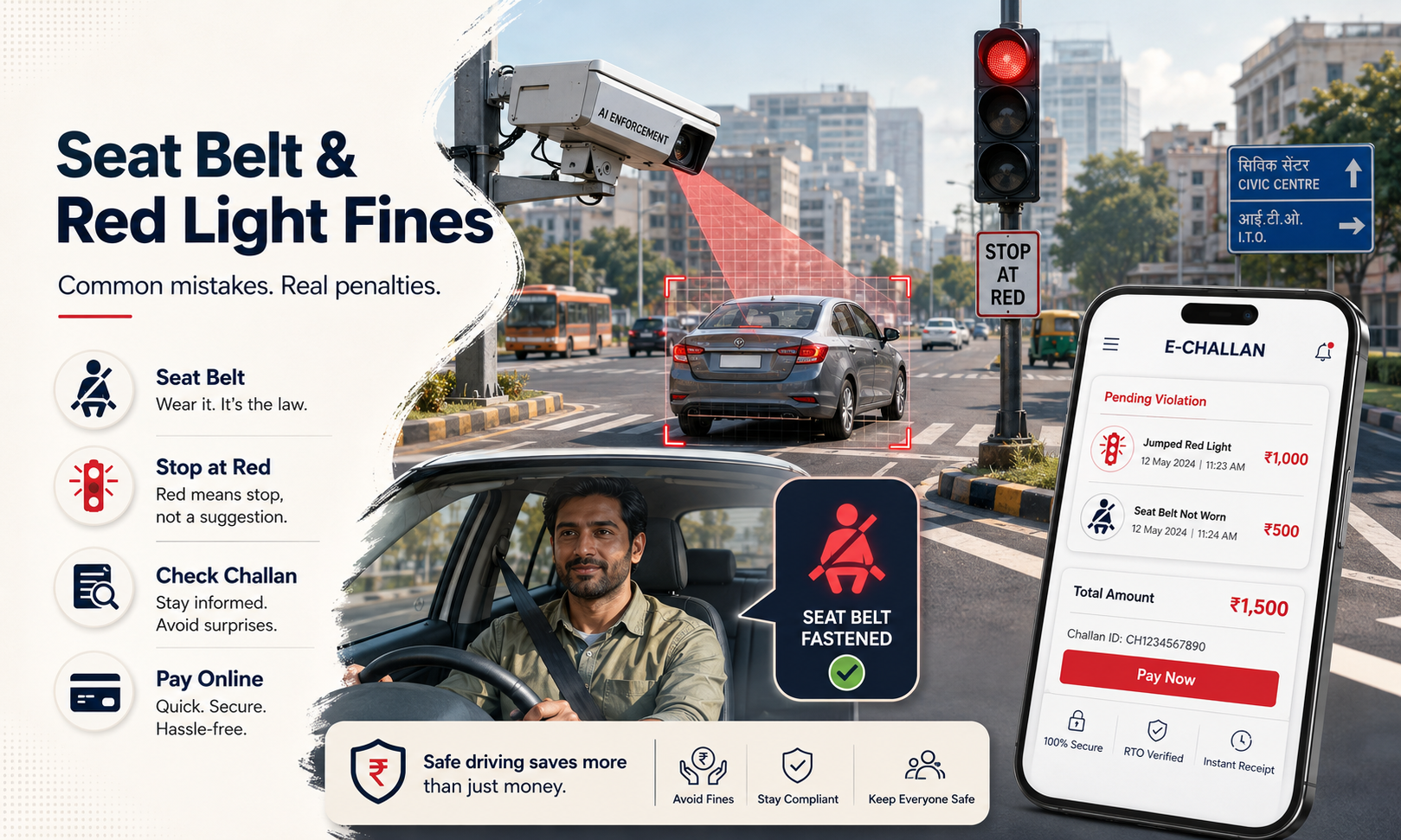
Road safety begins with small decisions. Fastening a seat belt before starting your journey and stopping at a red traffic signal may seem like simple habits, but they play a vital role in preventing accidents and saving lives. To improve compliance, traffic authorities across India actively monitor these violations through CCTV cameras, AI-powered surveillance systems, and on-ground enforcement teams.
As digital traffic enforcement expands, seat belt challan and red light challan have become two of the most frequently issued penalties. Understanding how these challans are generated, why they are important, and what to do if you receive one can help you stay compliant with traffic laws and avoid unnecessary legal complications.
Why Seat Belts Are Legally Mandatory
Seat belts are designed to protect vehicle occupants during sudden braking, collisions, or rollovers. They reduce the impact of accidents by preventing passengers from being thrown forward or ejected from the vehicle.
Indian traffic laws require drivers and passengers to wear seat belts wherever applicable. Failure to comply may result in a seat belt challan, even if the journey is short.
Traffic authorities may issue a challan when:
- The driver is not wearing a seat belt.
- Front-seat passengers are not wearing seat belts.
- Safety equipment is intentionally bypassed or misused.
In many cities, AI-enabled cameras can identify seat belt violations automatically without requiring a traffic officer to stop the vehicle.
Understanding Red Light Challans
Traffic signals are essential for managing the safe movement of vehicles and pedestrians. Ignoring a red signal not only violates traffic laws but also significantly increases the risk of serious accidents.
A red light challan may be issued if:
- A vehicle crosses the stop line after the signal turns red.
- The vehicle enters an intersection against a red signal.
- Automated surveillance systems detect the violation.
- Traffic police observe and record the offence during enforcement.
Most modern intersections are equipped with high-resolution cameras that continuously monitor signal compliance.
How Digital Traffic Enforcement Works
The introduction of smart traffic management has changed the way violations are detected. Instead of relying solely on manual inspections, authorities now use advanced technology to improve accuracy and transparency.
Common enforcement tools include:
- CCTV surveillance cameras.
- Automated Number Plate Recognition (ANPR).
- AI-powered traffic monitoring systems.
- Speed and signal violation cameras.
- Handheld digital enforcement devices.
Once a violation is detected, an electronic challan is generated and linked to the vehicle registration number or driver's details.
Common Situations That Lead to These Challans
Many violations occur because drivers underestimate routine traffic rules.
Examples include:
- Rushing Through a Yellow Signal: Some drivers accelerate to cross an intersection before the signal changes completely, often resulting in a red light violation.
- Ignoring Seat Belts During Short Trips: Many people skip wearing seat belts for nearby destinations, assuming the risk is low. However, accidents frequently occur close to home.
- Distracted Driving: Using a mobile phone while approaching an intersection may cause drivers to miss traffic signals or forget basic safety precautions.
- Heavy Traffic Conditions: Drivers sometimes cross stop lines in congested traffic without realizing they have committed a signal violation.
Developing disciplined driving habits significantly reduces the chances of these mistakes.
What Should You Do After Receiving a Challan?
If you receive a seat belt challan or red light challan, avoid making assumptions before reviewing the details.
Carefully verify:
- Vehicle registration number.
- Date and time of the offence.
- Location mentioned in the challan.
- Type of violation recorded.
- Available photographic or video evidence.
If the information is accurate, resolving the challan promptly is generally the best approach. Delaying action may create additional compliance issues.
Can You Challenge an Incorrect Challan?
Although digital enforcement systems have improved accuracy, errors can occasionally occur.
You may consider seeking clarification if:
- The vehicle shown is not yours.
- The registration number has been recorded incorrectly.
- Duplicate challans have been issued.
- The violation details are inaccurate.
- Technical issues affected the recording process.
Supporting documents, photographs, GPS records, or other evidence may help when raising a legitimate concern through the appropriate legal or administrative procedure.
Consequences of Ignoring Traffic Challans
Leaving traffic challans unresolved can create avoidable legal and administrative difficulties.
Possible consequences include:
- Additional financial penalties.
- Continued pending challan records.
- Legal notices in certain situations.
- Delays in vehicle-related administrative processes.
- Compliance concerns for commercial fleet operators.
Prompt action helps maintain accurate records and prevents future complications.
Best Practices to Avoid Future Challans
Safe and responsible driving remains the most effective way to avoid penalties.
Drivers should always:
- Wear seat belts before starting the vehicle.
- Ensure passengers are also wearing seat belts where required.
- Stop completely when the traffic signal turns red.
- Maintain a safe distance from vehicles ahead.
- Avoid distractions while driving.
- Follow road signs and lane markings.
- Stay alert at busy intersections.
- Respect pedestrian crossings.
These habits improve not only legal compliance but also overall road safety.
Why Compliance Matters
Traffic regulations exist to protect lives, not merely to impose penalties. Seat belts significantly reduce the severity of injuries during collisions, while obedience to traffic signals prevents dangerous intersection accidents.
With increasing adoption of AI-based enforcement systems across India, drivers are expected to follow traffic laws consistently. Routine compliance helps reduce accidents, improves traffic flow, and creates safer roads for motorists, cyclists, and pedestrians alike.
When Legal Guidance May Be Helpful
While many traffic challans can be resolved without difficulty, certain cases involve disputed evidence, repeated violations, licence-related issues, vehicle seizure, or procedural concerns. In such situations, obtaining professional legal guidance can help individuals understand their rights, review available evidence, and determine the most appropriate legal course of action.
Whether you receive a seat belt challan or a red light challan, timely verification and responsible action are essential. By following traffic rules, reviewing challan details carefully, and addressing any legal concerns promptly, drivers can maintain compliance with the law while contributing to a safer and more disciplined road environment across India.
