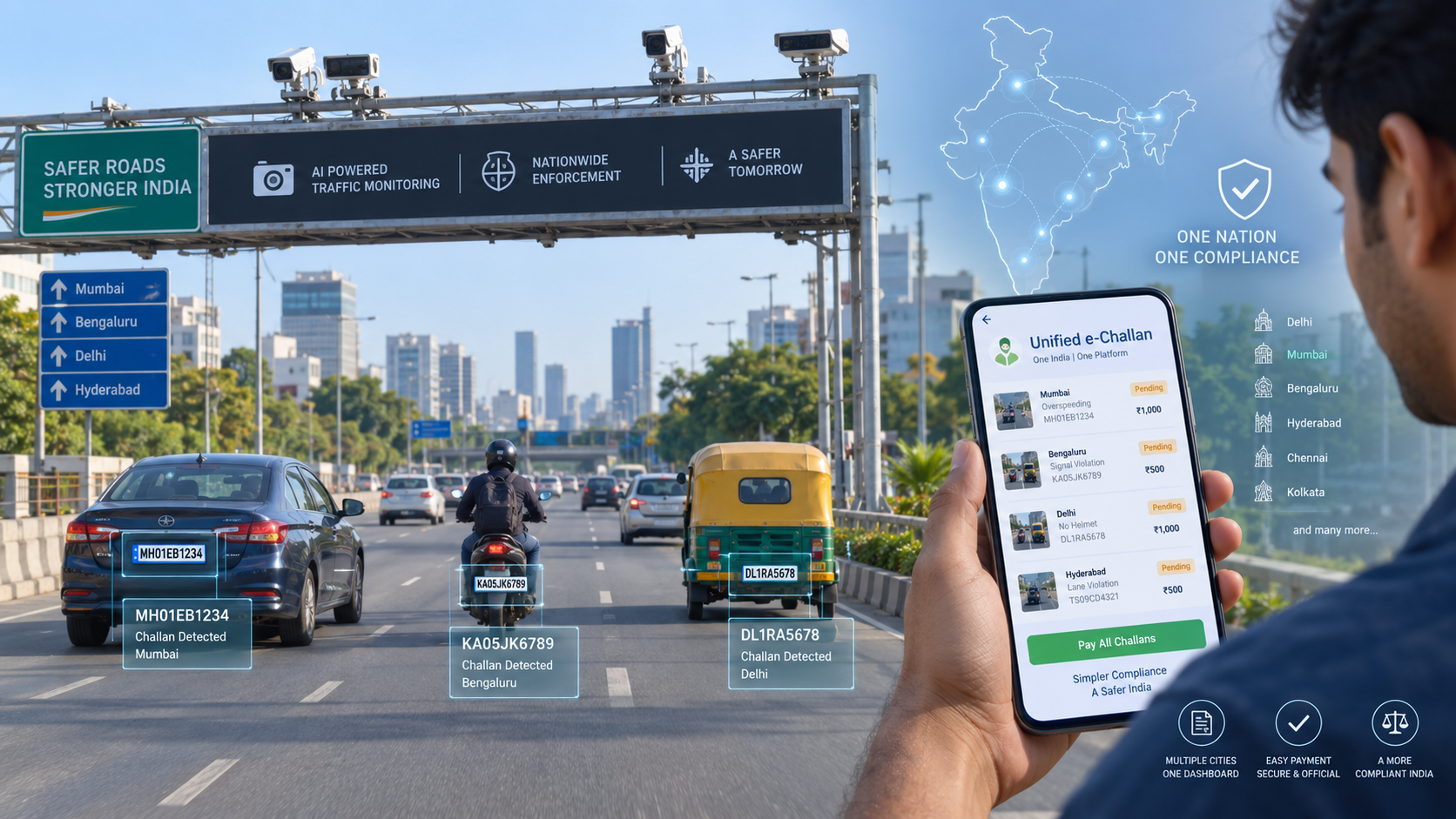
A pending traffic challan may look like a simple unpaid fine, but in 2026, vehicle owners have more reason to treat unresolved challans as a compliance issue rather than just a payment reminder.
As India's transport systems become increasingly digital, traffic enforcement records are being connected with vehicle and driver databases. This means an unresolved challan can potentially become relevant when an owner needs to complete certain vehicle-related services.
But does every pending challan automatically block your vehicle services? Not necessarily. The effect depends on the nature of the outstanding matter, the applicable rules, and the system used by the concerned authority.
The Real Problem With Ignoring a Pending Challan
Many owners follow a simple approach: if the vehicle is running normally, there is no immediate problem.
That assumption can create difficulties later.
A pending challan can remain associated with the vehicle's registration record. When the owner later needs a registration-related service, transfer of ownership, interstate movement documentation, fitness-related service, or another compliance process, outstanding issues may need to be cleared depending on the applicable rules and state-level implementation.
The important point is that a challan is not necessarily an isolated payment issue anymore. Digital enforcement is increasingly becoming part of the vehicle's wider compliance history.
2026 Brings a Clearer Challan Timeline
The Central Motor Vehicles Rules were amended in January 2026, introducing a defined process under Rule 167.
According to a March 2026 government reply, a person issued a challan generally has 45 days from its issuance to either accept and pay it or contest it through the designated portal with supporting documentary evidence. If the challan is not contested within that period, it is deemed accepted. A further 30-day period is provided for payment.
For vehicle owners, this makes delay particularly important.
Instead of leaving a challan untouched for months, owners should check it, verify the details and decide whether to pay or challenge it within the applicable timeline.
What Could Be Affected?
A pending challan does not mean that every vehicle service will automatically stop.
However, unresolved vehicle-related dues can become relevant when interacting with government transport systems.
For example, the government has already moved toward linking certain outstanding dues with vehicle services. In 2026, amendments concerning unpaid National Highway user fees provide that restrictions can be imposed on certain vehicle-related services when specified dues remain unpaid.
This reflects a broader direction: digital records are increasingly being used to enforce compliance before vehicle services are processed.
Therefore, owners should not assume that an old pending record will always remain invisible.
A Challan Can Also Become a Documentation Problem
Suppose you are planning to sell your vehicle.
The buyer wants the ownership transfer completed quickly. During the process, an outstanding traffic record appears against the registration number.
Now the issue is no longer simply about the fine. It can become a transaction problem.
Similarly, owners of commercial vehicles have an even stronger reason to maintain clean compliance records because fitness, permits and other regulatory requirements can directly affect business operations.
For private vehicle owners, the impact may be less immediate, but clearing unresolved challans before major registration or ownership-related transactions can prevent unnecessary delays.
What If the Challan Is Wrong?
This is where owners should avoid making another common mistake: paying a challan simply because it appears online.
Electronic enforcement systems can generate challans using cameras, ANPR and other monitoring technologies. Government rules provide for electronic evidence such as photographs, measurements where applicable, date, time and location of the offence.
If the vehicle number is incorrect, the photograph does not match, the vehicle was not being driven by the owner, or there is another factual error, the owner should examine the available evidence and use the appropriate dispute mechanism.
The 2026 Rule 167 process specifically provides an opportunity to contest a challan with supporting documents.
A Better 2026 Compliance Habit
Instead of checking challans only after receiving a notice, vehicle owners can adopt a simple routine:
- Check the vehicle's challan status periodically.
- Verify the registration number and offence details.
- Review the evidence where an electronic challan is issued.
- Pay genuine challans within the prescribed timeline.
- Contest incorrect challans with supporting documents.
- Keep payment receipts and dispute records.
- Check outstanding issues before selling or transferring a vehicle.
- Be especially careful if the vehicle is used commercially.
This approach turns challan management into part of regular vehicle compliance.
Where Legal Assistance Can Help
Some challans are straightforward and can be resolved through normal payment channels. Others involve incorrect vehicle identification, disputed evidence, multiple outstanding notices, ownership issues or more complicated legal questions.
In such situations, professional assistance can help the owner understand the available options instead of simply ignoring the notice.
Platforms such as Lawyered, ChallanPay, and LOTS247 can be useful for owners looking for assistance with challan-related legal and compliance issues.
Final Takeaway
In 2026, a pending challan should not be viewed only as an unpaid traffic fine.
India's vehicle enforcement ecosystem is becoming increasingly connected, and unresolved records can become relevant when owners need other vehicle-related services or documentation.
The safest approach is simple: check early, verify the details, pay genuine dues on time and challenge incorrect challans through the proper process.
Keeping a vehicle compliant is no longer just about avoiding another fine on the road. It is also about keeping the vehicle's digital record ready for the next transaction or government service.
