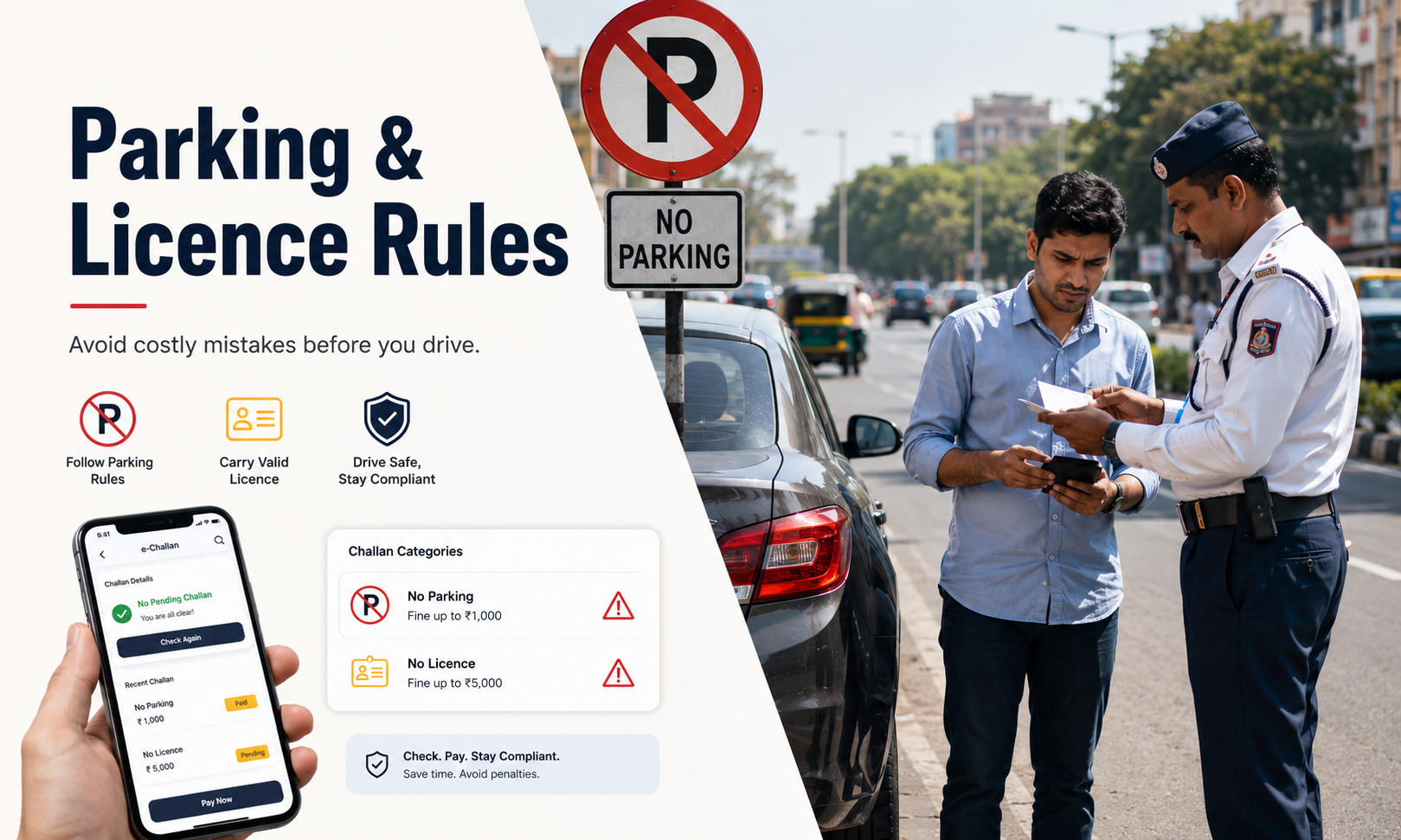
Every driver wants a smooth journey, but even a few minutes of carelessness can result in legal penalties. Parking your vehicle in a restricted area or driving without a valid driving licence are two of the most common traffic violations in India. With smart surveillance systems and digital enforcement becoming the norm, authorities can now identify these offences more efficiently than ever before.
If you have recently received a no parking challan or want to understand the driving without licence fine, this guide explains the legal implications, common mistakes, and the importance of complying with traffic laws.
Why Traffic Compliance Matters
Traffic laws are designed to ensure public safety, improve traffic flow, and reduce accidents. Every rule—from parking regulations to licence requirements—serves a practical purpose.
Parking in unauthorized areas may obstruct emergency vehicles, create congestion, or endanger pedestrians. Similarly, driving without a valid licence raises serious safety concerns because it indicates that the driver's eligibility has not been legally verified.
Following these regulations is not only a legal obligation but also a responsibility toward other road users.
Understanding a No Parking Challan
A no parking challan is issued when a vehicle is parked in an area where parking is prohibited under local traffic regulations.
These restricted zones are usually identified through road signs, markings, or municipal traffic notifications.
Common situations that lead to a no parking challan include:
- Parking near traffic intersections.
- Blocking pedestrian crossings.
- Parking in front of emergency exits.
- Parking in designated no-parking zones.
- Occupying spaces reserved for emergency or public services.
- Leaving a vehicle in areas that obstruct traffic movement.
Traffic authorities may issue the challan manually or through CCTV-based enforcement systems.
What Is Driving Without a Licence?
Driving without a valid licence refers to operating a motor vehicle without possessing a legally recognized driving licence applicable to that category of vehicle.
This may include situations where:
- The driver has never obtained a licence.
- The licence has expired.
- The licence has been suspended.
- The driver is operating a vehicle outside the authorised licence category.
- The driver is unable to produce a valid licence when legally required.
A valid driving licence demonstrates that the individual has met the legal requirements to operate a vehicle safely.
How Traffic Authorities Detect These Violations
Modern traffic enforcement relies on a combination of technology and on-ground inspections.
Authorities commonly use:
- CCTV surveillance systems.
- AI-enabled monitoring cameras.
- Automated Number Plate Recognition (ANPR).
- Mobile enforcement teams.
- Digital challan devices.
- Routine document verification during traffic checks.
These systems help improve transparency while ensuring consistent enforcement across different regions.
Common Mistakes That Lead to Penalties
Many drivers unknowingly commit violations because they overlook basic traffic rules.
- Assuming "Just Five Minutes" Is Acceptable: Parking briefly in a restricted area often leads drivers to believe they will avoid penalties. However, many no-parking zones are continuously monitored through cameras.
- Ignoring Parking Signs: Drivers sometimes focus on finding a convenient parking spot instead of checking nearby restrictions.
- Driving with an Expired Licence: Some individuals forget to renew their licence before its expiry date and continue driving unknowingly.
- Borrowing Someone Else's Vehicle: Driving another person's vehicle does not remove the legal requirement to carry your own valid driving licence.
Being attentive to these details helps prevent unnecessary challans.
What Should You Do If You Receive a Challan?
Receiving a challan should prompt you to carefully review all available information.
Check the following details:
- Vehicle registration number.
- Date and time of the violation.
- Exact location.
- Type of offence.
- Supporting evidence, where available.
If the challan appears accurate, it should be resolved through the appropriate process. If you believe there has been an error, collect relevant documents and seek clarification through the prescribed legal procedure.
Can a Challan Be Issued Incorrectly?
Although digital systems have significantly improved enforcement accuracy, errors are still possible.
Examples include:
- Incorrect vehicle identification.
- Duplicate challans.
- Technical issues with surveillance systems.
- Human data entry mistakes.
- Incorrect recording of location or offence.
Drivers who believe a challan has been issued incorrectly should preserve all relevant documents and supporting evidence before pursuing legal remedies.
Practical Tips to Avoid These Violations
Simple precautions can significantly reduce the chances of receiving a traffic challan.
Always remember to:
- Park only in authorised parking spaces.
- Observe road signs before leaving your vehicle.
- Renew your driving licence before its expiry.
- Carry your driving licence whenever you drive.
- Ensure your vehicle documents remain valid.
- Follow traffic instructions issued by authorities.
- Avoid obstructing public roads and pedestrian pathways.
Responsible driving habits reduce both legal risks and inconvenience.
Why These Rules Protect Everyone
Traffic regulations are not intended merely to generate penalties. Parking restrictions help maintain emergency access, improve traffic flow, and reduce congestion. Licensing requirements ensure that every driver possesses the minimum skills and legal eligibility required to operate a vehicle safely.
Compliance benefits:
- Drivers.
- Pedestrians.
- Emergency services.
- Public transport.
- Commercial transport operators.
Safer roads are possible only when every road user follows the rules consistently.
Legal Assistance for Traffic Matters
While many challans are resolved without difficulty, certain cases may involve disputed violations, vehicle towing, repeated offences, licence suspension, or procedural concerns. In such situations, obtaining professional legal guidance can help drivers understand their legal rights, review available evidence, and determine the most appropriate course of action.
Legal support can also be valuable for businesses managing commercial vehicles, where compliance plays a significant role in daily operations.
Conclusion
Receiving a no parking challan or facing a driving without licence fine can be both inconvenient and avoidable. Most traffic penalties arise from everyday oversights rather than intentional misconduct. By paying attention to parking restrictions, carrying a valid driving licence, and complying with traffic regulations, drivers can reduce the risk of penalties while contributing to safer roads.
As digital enforcement continues to expand across India, awareness and timely compliance have become more important than ever. Reviewing your vehicle records, maintaining valid documentation, and seeking legal guidance whenever necessary can help you handle traffic-related issues confidently and responsibly.
