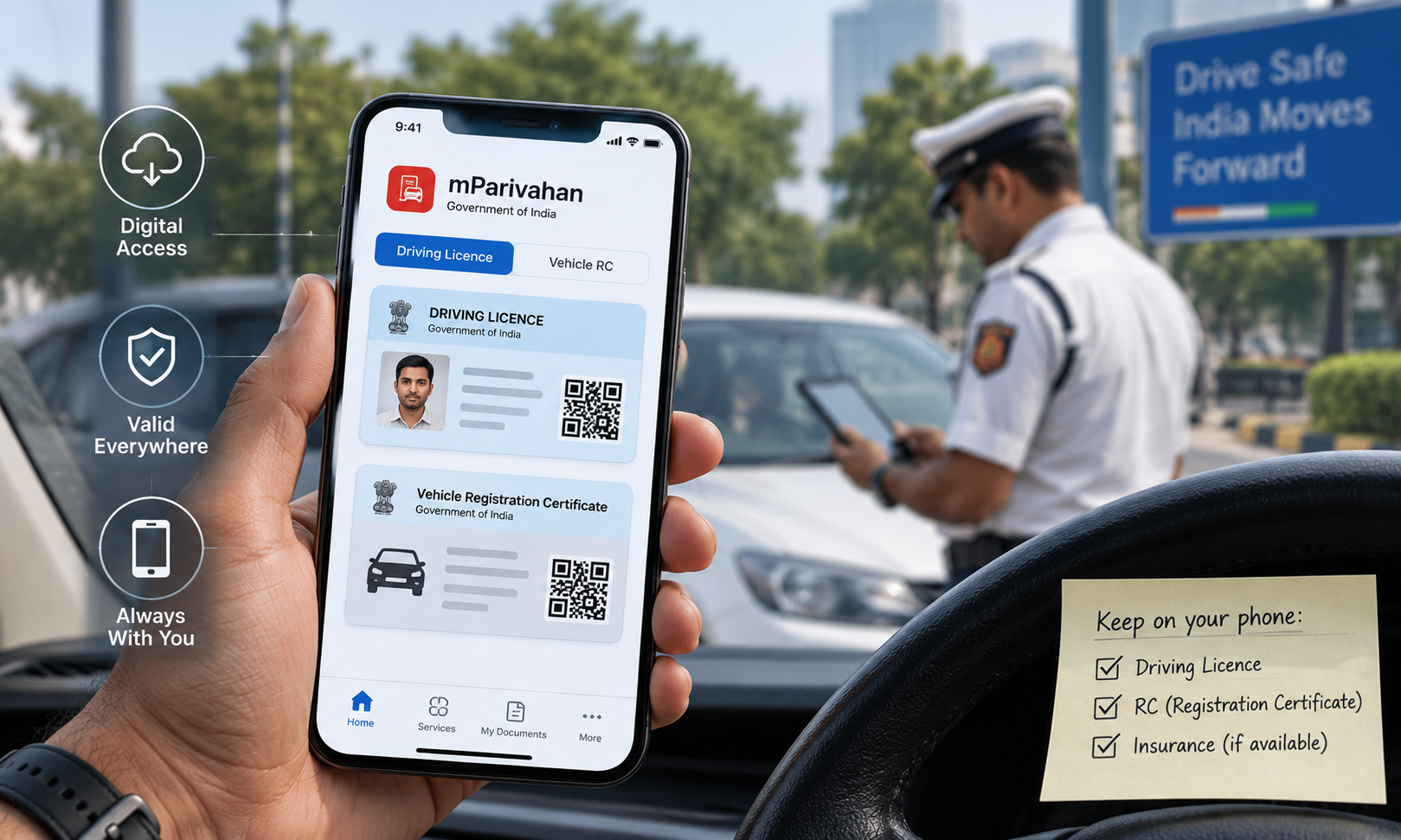
Smartphones have changed the way people manage everything from payments to travel bookings, and vehicle documentation is no exception. In India, drivers can access important vehicle-related documents digitally, reducing the need to carry physical papers for every journey.
A digital driving licence and Registration Certificate (RC) can make document management more convenient, but convenience should not be confused with complete compliance. Vehicle owners still need to understand which digital records are acceptable, where to access them, and what to do when information is outdated or unavailable.
Why Digital Vehicle Documents Matter
Earlier, drivers often depended entirely on physical copies of their driving licence and RC. Losing a document or forgetting it at home could create unnecessary difficulty during a traffic check.
Digital systems have changed this experience by allowing eligible users to access official records electronically.
For many vehicle owners, this means important documents can be available through a smartphone instead of being stored only inside a wallet, vehicle glove compartment, or file.
The bigger advantage is accessibility. A driver travelling away from home can potentially retrieve relevant records without carrying every physical document.
Driving Licence on Your Phone
A digital driving licence can provide convenient access to your licence information through authorised digital platforms.
Before relying on a digital version, however, make sure the information displayed is accurate and corresponds with your current licence.
Check details such as:
- Your name
- Licence number
- Date of birth
- Validity
- Vehicle category
- Other applicable licence information
If any information appears incorrect, it is better to resolve the discrepancy through the appropriate authority rather than assuming that the digital record will automatically correct itself.
What About the Digital RC?
The Registration Certificate contains important information about your vehicle and its registration.
A digital RC may display details including:
- Registration number
- Owner information
- Vehicle class
- Manufacturer and model
- Fuel type
- Registration-related information
- Other vehicle particulars
Having access to the digital RC can be particularly useful when travelling, purchasing or selling a vehicle, or dealing with routine vehicle-related requirements. However, vehicle owners should ensure that the digital information remains current.
DigiLocker and mParivahan
Two commonly used government-supported digital platforms are DigiLocker and mParivahan.
DigiLocker provides access to digital documents issued or made available through participating government authorities and organisations. mParivahan is focused on transport-related services and vehicle information.
Drivers should use official versions of these services rather than downloading unknown applications that claim to provide digital licence or RC facilities. The source matters because fake applications and websites can be designed to collect personal information.
Can You Depend Only on Your Phone?
Your phone can be useful, but relying exclusively on it creates a practical risk.
A dead battery, damaged phone, poor internet connection, or application problem could prevent you from accessing information when needed.
For this reason, vehicle owners should maintain their important records properly and understand the accepted forms of documentation applicable to their situation. The goal should be convenient access, not complete dependence on one device.
What Should You Keep Accessible?
A driver can consider keeping access to the following information:
- Driving Licence: Ensure your current licence information is available through an authorised digital platform.
- RC: Keep your current vehicle registration information accessible.
- Insurance: Maintain evidence of valid motor insurance as applicable.
- Pollution Certificate: Where applicable, ensure the required pollution-related certificate remains valid.
- Emergency Information: Important vehicle and emergency contact information can also be stored securely on your phone.
However, sensitive personal information should not be stored casually in unsecured notes, screenshots, or unknown applications.
Screenshots Are Not Always the Best Option
Taking a screenshot of your licence or RC may appear convenient, but an ordinary image does not necessarily provide the same functionality or verification capability as an official digital record.
Official digital platforms can provide records that are easier to verify and update.
If a digital document is required for an official purpose, use the accepted format rather than assuming that any photograph or screenshot will be sufficient.
What Happens During a Traffic Check?
If a traffic officer asks for vehicle or driving documents, the driver should provide the relevant documentation in an accepted form.
Digitally accessible records can make this process easier when the relevant information is available through recognised platforms.
However, the exact requirements can depend on the circumstances, applicable regulations, and enforcement authority. Drivers should therefore avoid relying on social media posts or informal claims about what documents are “always” accepted.
What If Your Digital Information Is Wrong?
A mismatch between physical records and digital records should not be ignored.
For example, you may discover:
- An incorrect vehicle owner's name
- Wrong vehicle details
- An outdated address
- Incorrect licence information
- An old registration status
Take screenshots or retain relevant records showing the discrepancy and approach the appropriate authority or service for correction. Accurate records become increasingly important as more transport and enforcement processes move online.
Digital Documents and Vehicle Sales
Digital records can also simplify vehicle transactions, but they do not replace the formal ownership-transfer process.
When buying or selling a vehicle, both parties should ensure that the required transfer documentation is completed correctly. Simply handing over the vehicle, keys, or digital RC does not by itself guarantee that government ownership records have been updated.
A proper transfer helps reduce the possibility of future disputes involving challans, insurance, accidents, or other vehicle-related matters.
Protect Your Digital Vehicle Information
Your driving licence and RC contain personal and vehicle information. Avoid sharing screenshots publicly or sending documents to unknown people through messaging platforms.
Be especially cautious when someone asks for:
- OTPs
- Login credentials
- Banking details
- Full personal information
- Unverified application downloads
Government-related services should be accessed through trusted and official channels.
What Vehicle Owners Should Do in 2026
Digital documentation is becoming an increasingly normal part of vehicle ownership in India. Drivers can benefit from this transition by keeping their information updated and learning how to access official records correctly.
A simple routine can help:
- Check your licence validity.
- Verify your RC information.
- Keep relevant digital documents accessible.
- Monitor insurance and pollution-related validity where applicable.
- Update records after changes in ownership or personal information.
- Use official digital platforms.
- Avoid sharing sensitive documents unnecessarily.
Final Takeaway
Digital driving licences and RCs have made vehicle documentation more accessible and convenient for Indian drivers. Instead of depending entirely on physical paperwork, vehicle owners can use authorised digital services to access important records from their phones.
But digital convenience comes with responsibility. Keep your records accurate, use trusted platforms, protect your personal information, and understand what documentation is applicable to your situation.
Your phone can now act as a useful vehicle-document wallet. Just make sure the information inside it is official, current, secure, and accessible when you need it.
