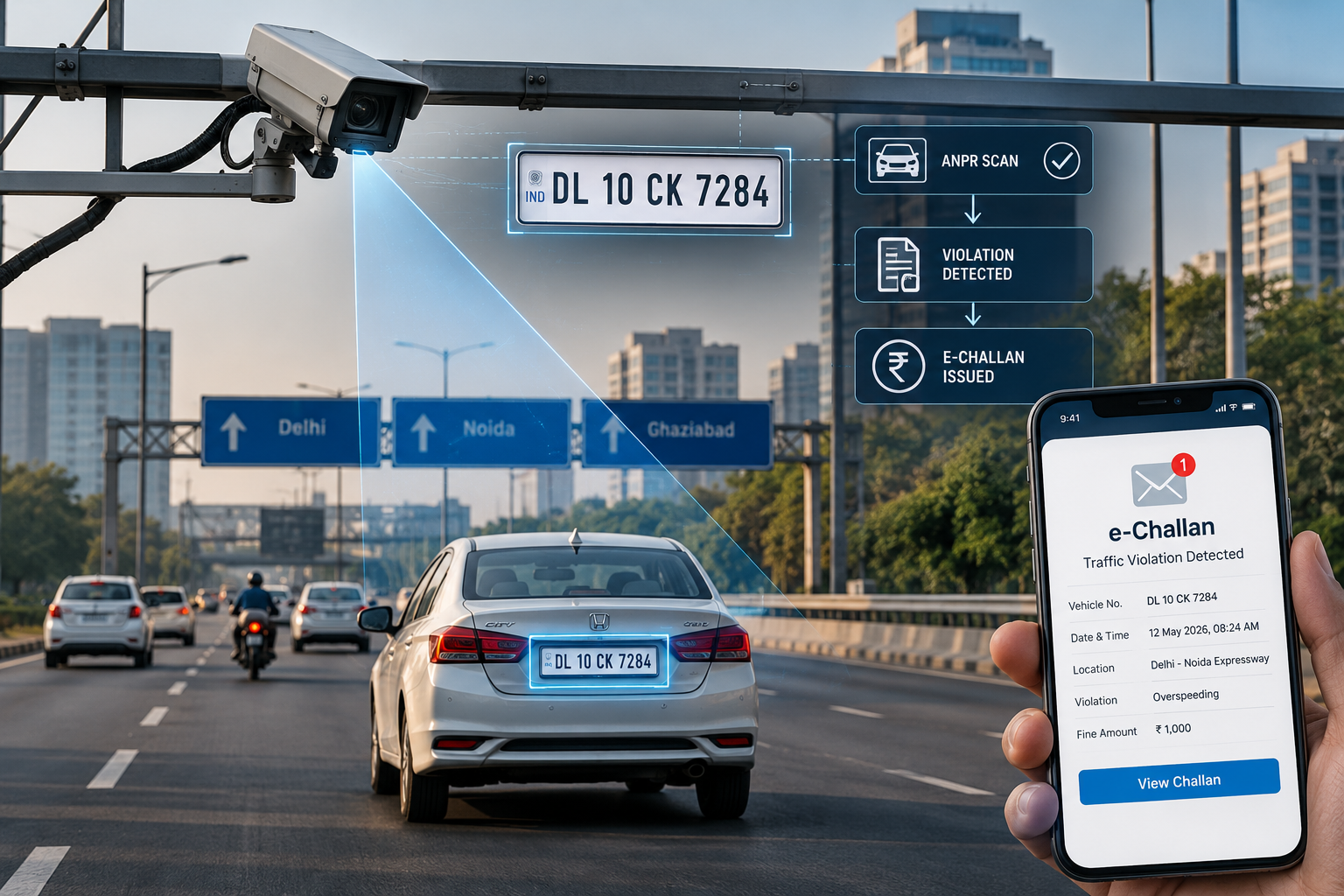
Imagine driving through a busy intersection and continuing your journey without being stopped by a traffic officer. A few days later, you discover that a traffic challan has been recorded against your vehicle. How did it happen?
The answer may be Automatic Number Plate Recognition (ANPR) technology.
ANPR systems are increasingly becoming part of modern traffic enforcement. They can identify vehicle registration numbers and assist authorities in detecting certain traffic violations without requiring an officer to physically stop the vehicle. This technology is changing the traditional idea of how a traffic challan is issued.
But how does the process work, and what should a vehicle owner do after receiving such a challan?
What Is an ANPR Camera?
ANPR stands for Automatic Number Plate Recognition. It is a technology that uses cameras and image-processing systems to read vehicle registration plates.
The system can capture information such as:
- Vehicle registration number
- Date and time
- Location
- Images of the vehicle
- Other relevant enforcement information
The captured registration number can then be compared with transport or enforcement records.
ANPR technology can be particularly useful in locations where authorities need to monitor a large number of vehicles without manually checking every registration plate.
Can ANPR Issue a Challan Without Stopping the Vehicle?
In appropriate circumstances, yes, a traffic violation can be recorded electronically without the vehicle being stopped at the roadside.
The camera does not necessarily “issue” the challan independently. Instead, the ANPR system captures vehicle information and evidence of an alleged violation, while the relevant enforcement system or authority uses that information to generate an electronic challan in accordance with applicable procedures.
This is one of the biggest differences between traditional and technology-assisted traffic enforcement.
A driver may therefore pass through an intersection without interacting with a police officer and later find an electronic challan associated with the vehicle.
What Types of Violations Can Be Detected?
The exact capabilities depend on the equipment and enforcement system deployed in a particular location.
ANPR and related camera systems can assist with identifying situations involving:
- Red-light violations
- Vehicles exceeding applicable speed limits when integrated with speed detection systems
- Certain parking or stopping violations
- Vehicles associated with specific enforcement alerts
- Other offences that can be established through electronic evidence
Not every ANPR camera performs every type of enforcement. Its function depends on how the system has been configured and what additional technologies are connected to it.
What Happens After the Camera Captures Your Vehicle?
The enforcement process generally involves several stages.
First, the camera captures the vehicle and registration plate. The system processes the registration information and associates it with the relevant vehicle record.
Next, the alleged violation and available evidence may be reviewed or processed according to the applicable enforcement procedure.
If the violation is established under the relevant system, an electronic challan can be generated.
The vehicle owner can subsequently discover the challan through the appropriate digital traffic services.
This process reduces dependence on physical paperwork and allows authorities to maintain electronic records.
Does the Registered Owner Automatically Become the Offender?
Not every situation is identical.
A vehicle's registration record identifies its registered owner, but the person driving the vehicle at the time of an offence may be someone else.
The legal consequences can therefore depend on the nature of the violation, the evidence available, and the provisions applicable to that offence.
If a challan appears against your vehicle but you were not driving it, do not simply ignore the notice. Review the details and determine what procedure is available for responding to the allegation.
What If the ANPR Camera Makes a Mistake?
Technology can improve enforcement efficiency, but no system should be assumed to be completely error-free.
Potential issues may include:
- Incorrect number plate recognition
- Similar-looking registration numbers
- Unclear images
- Incorrect vehicle association
- Duplicate records
- Errors in date, time, or location
- Technical problems affecting enforcement evidence
If you believe a challan is incorrect, examine the available evidence carefully before making a decision.
A genuine dispute should be supported by relevant information rather than simply a disagreement with the fine.
Can You Challenge an ANPR-Based Challan?
The use of technology does not remove the possibility of challenging an incorrect challan.
If you believe that an ANPR-generated violation has been wrongly attributed to your vehicle, you should use the applicable grievance or dispute mechanism.
Useful information may include:
- Challan details
- Vehicle registration documents
- Photographs
- Location records
- Travel records
- Other documentary evidence relevant to the incident
The appropriate process and available remedies can depend on the nature of the challan and the applicable authority.
Why Drivers Should Check Their Challan Records
One important consequence of automated enforcement is that drivers cannot rely solely on roadside interactions to know whether they have committed a recorded violation.
A vehicle owner should periodically check relevant electronic challan records and ensure that vehicle documentation remains current.
Early verification can help you:
- Identify genuine violations
- Resolve pending matters
- Detect incorrect challans
- Respond within applicable timelines
- Avoid unnecessary escalation
This is especially important for commercial vehicle operators managing multiple drivers and vehicles.
Beware of Fake ANPR and e-Challan Messages
The growth of digital enforcement has also created opportunities for fraudsters.
Vehicle owners may receive fake messages claiming that an ANPR camera has detected a violation and demanding immediate payment through an unfamiliar link.
Never assume that a message is genuine simply because it contains your vehicle number.
Verify the challan through an authorised government traffic service before making a payment or sharing sensitive information. Avoid providing OTPs, passwords, banking details, or other confidential information to unknown callers or websites.
When Legal Help Can Be Useful
Most routine electronic challans can be handled through the applicable online process. However, professional legal assistance may be useful when a matter involves disputed evidence, repeated violations, licence-related consequences, vehicle seizure, or court proceedings.
A legal professional can help examine the circumstances and explain the appropriate options based on the applicable law.
Final Takeaway
ANPR technology is changing the way traffic enforcement operates in India. A vehicle does not necessarily need to be stopped by a traffic officer for an electronically detected violation to result in a challan.
The important distinction is that the camera captures and processes vehicle information and evidence, while the authorised enforcement system and authority handle the challan process.
If you receive an ANPR-based challan, verify the details, examine the available evidence, and take timely action. If the record appears incorrect, use the prescribed dispute mechanism rather than ignoring it.
As India's traffic enforcement becomes increasingly automated, understanding how ANPR works can help drivers protect their rights while taking greater responsibility for road compliance.
