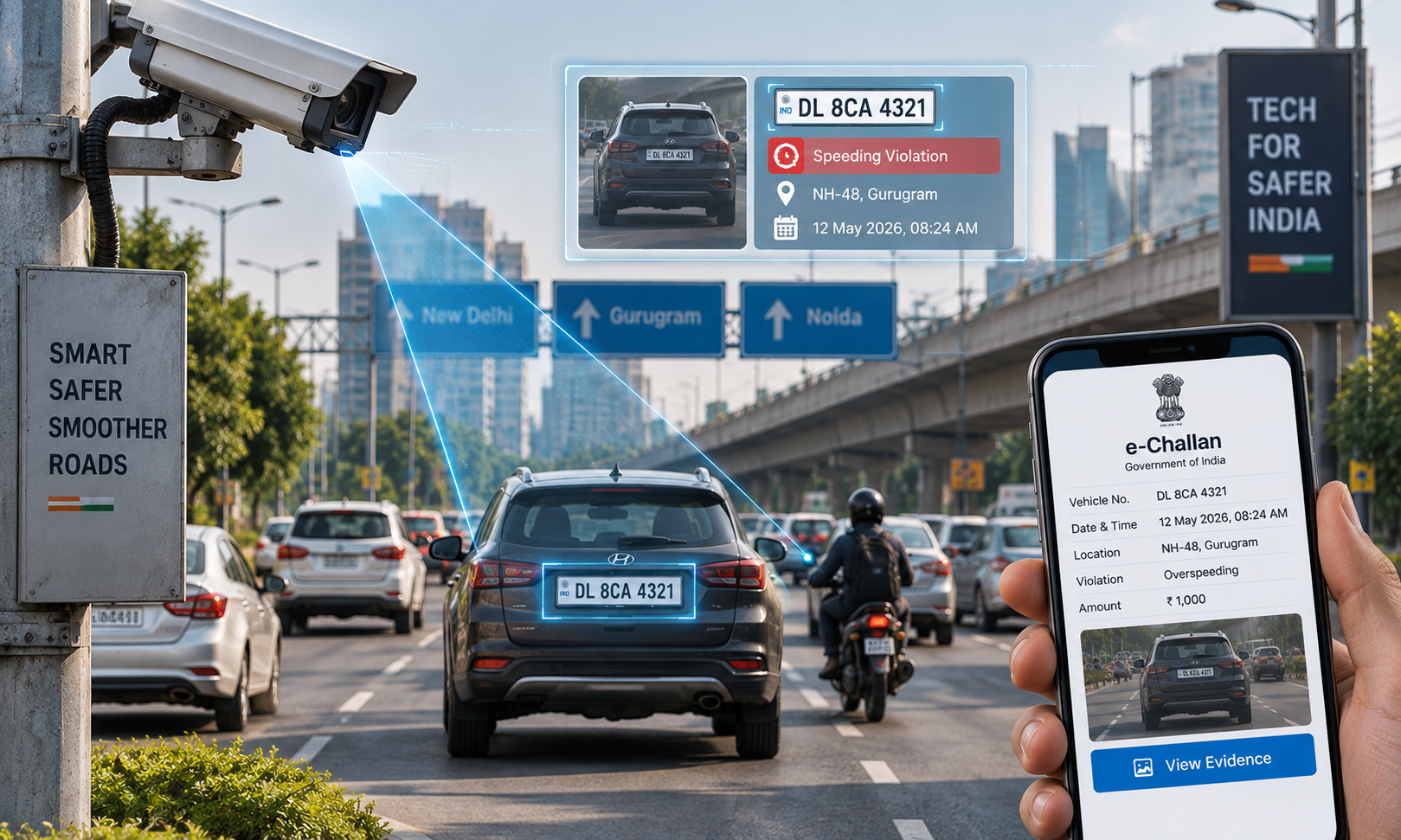
India's traffic enforcement is entering a technology-driven phase where cameras, automated systems, and data analysis are becoming an important part of how road violations are detected. A driver may now receive an automated challan without ever being stopped by a traffic officer.
This shift is making traffic enforcement more efficient, but it also raises practical questions for motorists. How are automated violations recorded? What evidence is used? Can technology make mistakes? And what should a driver do after receiving an AI-generated challan?
Understanding these issues can help vehicle owners deal with digital traffic enforcement more confidently.
What Is AI-Powered Traffic Enforcement?
AI-powered traffic enforcement refers to the use of cameras, software, image processing, and connected databases to identify potential traffic violations.
Depending on the system deployed, technology may help authorities identify:
- Vehicles crossing red lights
- Speed-limit violations
- Vehicles with unreadable or non-compliant number plates
- Certain helmet and seat-belt violations
- Unauthorised parking
- Other traffic offences detectable through visual or digital systems
The technology allows authorities to monitor busy roads continuously instead of depending entirely on officers being physically present at every location.
How an Automated Challan Is Created
An automated traffic enforcement process generally begins when a camera or electronic device captures an incident.
The system may identify the vehicle registration number and record information such as the location, date, time, and nature of the suspected violation.
The relevant information can then be matched with vehicle records. Once the offence is processed according to the applicable enforcement procedure, an electronic challan may be generated.
This explains why a driver can receive a challan even though nobody stopped the vehicle at the time of the alleged offence.
What Counts as Evidence?
An automated challan is generally supported by information collected during the enforcement process.
Depending on the type of violation and technology involved, evidence may include:
- Photographs
- Video footage
- Number-plate images
- Recorded speed measurements
- Date and time information
- Location information
- Vehicle registration details
- Other electronic enforcement records
The nature and availability of evidence can vary between different enforcement systems and jurisdictions.
For a driver, the important point is to review the evidence associated with the notice rather than relying only on the challan amount or violation description.
Can Automated Systems Make Mistakes?
Technology can process thousands of vehicles more quickly than manual enforcement, but that does not mean every automated record is necessarily perfect.
Potential problems can include incorrect number-plate recognition, unclear images, poor lighting, obstructed plates, duplicate records, or errors in vehicle information.
For example, a camera may interpret one registration character incorrectly and associate a violation with another vehicle.
This is why drivers should verify an automated challan before deciding how to respond.
How Drivers Can Check an Automated Challan
When an unexpected challan appears, start with the basic facts.
Compare the information in the record with your own vehicle details.
Check:
- Registration number
- Vehicle description
- Date
- Time
- Location
- Alleged offence
- Available photographs or other evidence
- Challan status
If everything corresponds with your vehicle and the circumstances, you can follow the applicable procedure for resolving the violation.
If something appears inconsistent, preserve the information and investigate further.
What If the Evidence Does Not Match Your Vehicle?
This is one of the situations where evidence becomes particularly important.
Suppose the challan contains your registration number, but the photograph appears to show a different vehicle. Differences in the vehicle's model, colour, body type, number plate, or other identifiable characteristics may be relevant.
Similarly, if the vehicle was not at the stated location at the relevant time, supporting records may help explain the discrepancy.
A dispute is generally stronger when it identifies a specific factual problem and provides evidence supporting the explanation.
Can a Driver Challenge an Automated Challan?
The use of AI or automated cameras does not necessarily eliminate the ability to challenge an incorrect traffic record.
If a vehicle owner believes a challan has been wrongly issued, the owner should use the applicable official grievance or dispute procedure.
The exact process can depend on the offence, state or local authority, and applicable regulations.
When submitting a challenge, explain the issue clearly and attach relevant evidence where the system permits it.
Simply stating that “the camera is wrong” may be less useful than demonstrating exactly why the recorded violation does not correspond with the vehicle or circumstances.
Why Evidence Should Be Preserved
Digital information can be important when resolving a disputed challan.
If you find an incorrect record, retain copies or screenshots of the relevant challan details and any supporting material available through the official system.
Useful supporting information may include:
- Vehicle documents
- Photographs
- Location records
- Travel records
- Parking receipts
- Other documents relevant to the specific incident
Evidence should be genuine and unaltered. Editing photographs or documents can undermine the credibility of a complaint.
Automated Enforcement and Driver Responsibility
Technology does not change the basic responsibility of motorists to follow traffic laws.
Drivers should continue to:
- Respect speed limits
- Follow traffic signals
- Wear required safety equipment
- Park legally
- Maintain valid documents
- Avoid distracted driving
- Keep vehicle information updated
The absence of a visible traffic officer should never be treated as permission to ignore the rules.
The Importance of Accurate Vehicle Records
Automated enforcement depends heavily on vehicle registration information.
Vehicle owners should therefore ensure that ownership, registration, contact information, and other applicable records remain accurate.
This becomes particularly important after selling a vehicle or completing an ownership transfer. If official records are not updated correctly, future traffic notices may create unnecessary confusion.
Beware of Fake Automated Challans
As digital enforcement grows, fraudulent messages can also become more convincing.
A message claiming that an AI camera has detected a violation should not automatically be trusted. Before making any payment, verify the challan through an official government service.
Never share OTPs, passwords, banking credentials, or other sensitive information with unknown individuals claiming to represent traffic authorities.
When Legal Assistance May Help
Most routine traffic matters can be addressed through the applicable administrative process. However, legal assistance may be useful when an automated challan involves disputed evidence, repeated violations, vehicle seizure, licence consequences, or court proceedings.
A legal professional can examine the circumstances and help determine what options may be available.
Final Takeaway
AI-powered traffic enforcement is changing the relationship between drivers and traffic authorities in India. Cameras and connected systems can identify violations without requiring a roadside stop, while digital records make enforcement easier to track.
For drivers, the best response is not to fear the technology but to understand it. Check the challan, examine the evidence, verify the vehicle details, and challenge genuine errors through the appropriate process.
Automated enforcement can make traffic monitoring more consistent, but responsible driving and informed action remain essential. As India's roads become increasingly connected to digital enforcement systems, knowing how automated challans and evidence work can help every vehicle owner protect their rights while staying compliant with traffic laws.
